From Shooting Range to Inn
- 1467
Founding of the Schützenbruderschaft (Marksmen’s Brotherhood) for the military protection of the town. - 1473
Beginning of the Marienschießen (Marian Shooting Festival) in July. In the following years, a shooting festival was held annually. - 1658
The Schützenbruderschaft receives the right to brew beer tax-free three times a year. - 1663
Construction of the first Schützenhaus as a simple half-timbered building for storing weapons and shooting targets. The associated shooting range, then located outside the town walls, has been preserved as a festival ground to this day. At that time, two shooting festivals per year, at Pentecost and in July, became tradition. - 1758
Destruction of the Schützenhaus in the Seven Years’ War. Reconstruction took place immediately after the war ended.
Leased Restaurant and Hotel Operation
- 1845
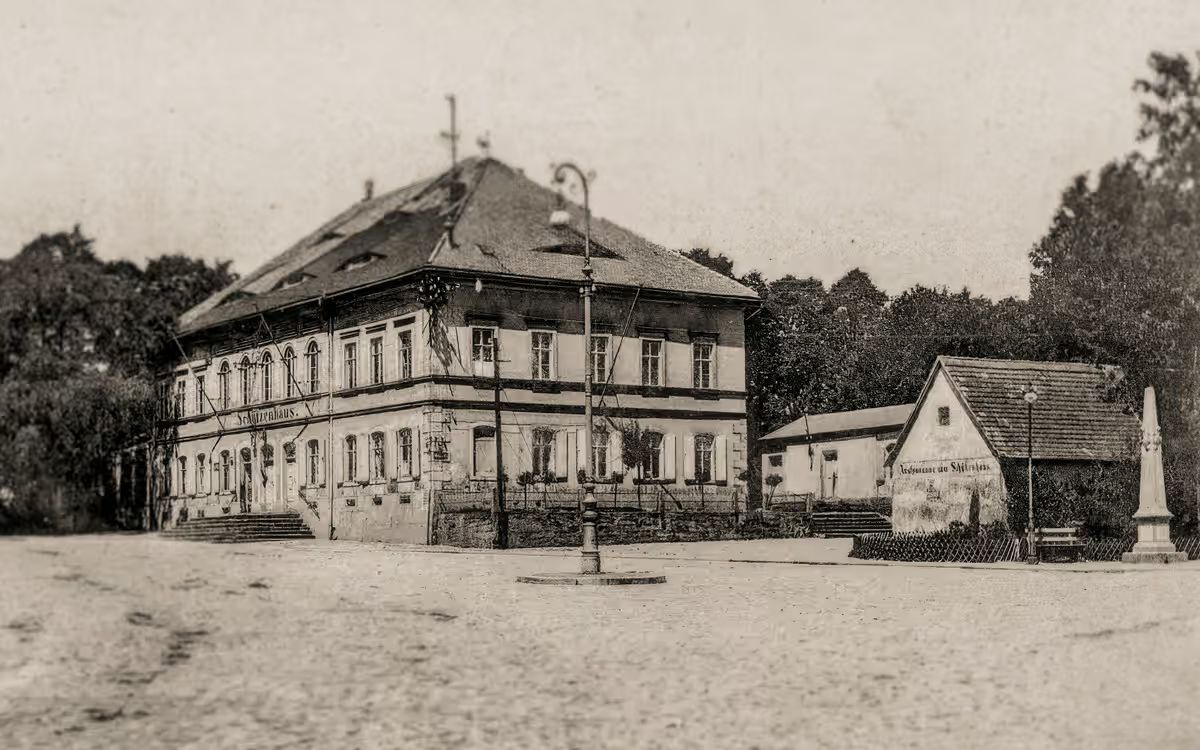
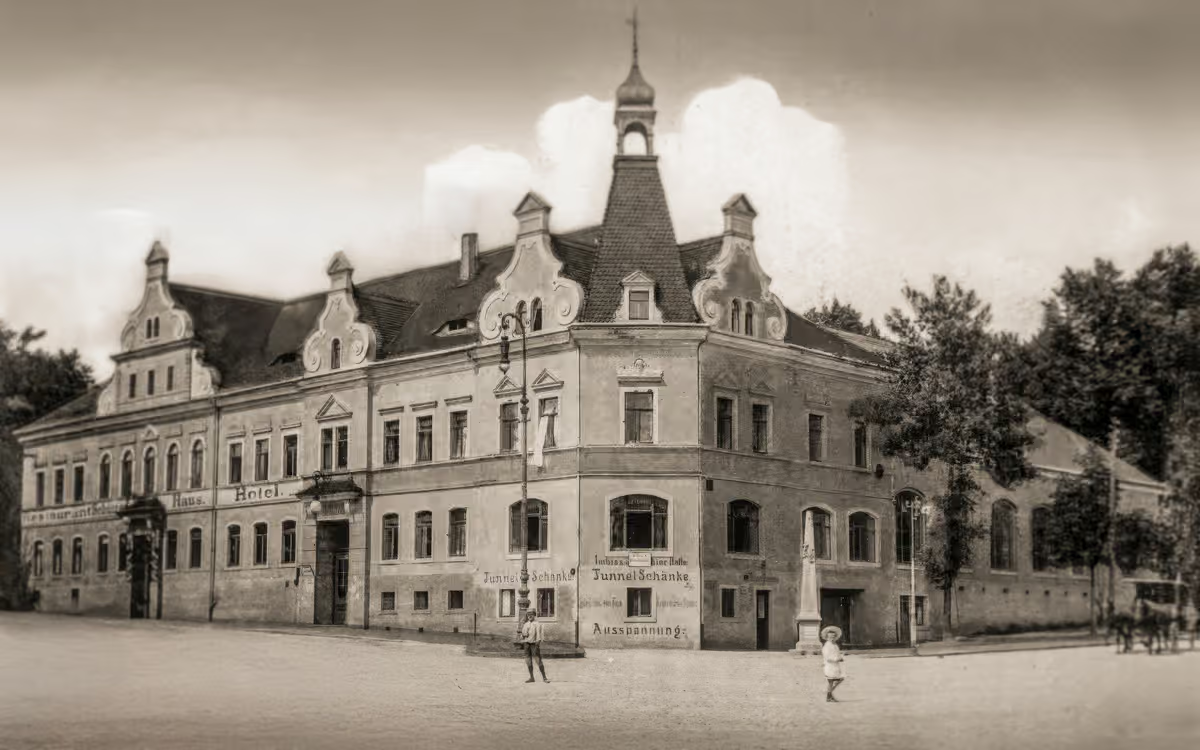
The new Schützenhaus building in simple neoclassical style is completed. Construction took one year. A leased restaurant was opened, which is still located in the same rooms today. On the north side, a shady beer garden was created with linden tree plantings. - 1905
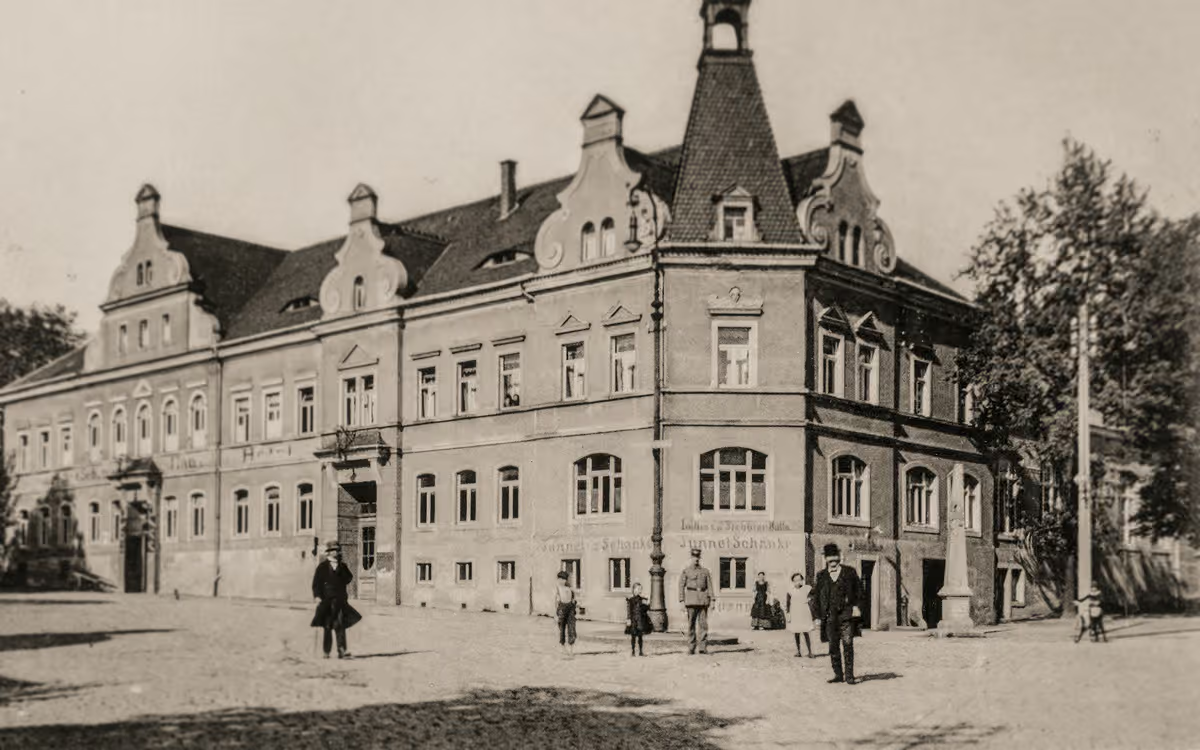
Expansion and renovation in Art Nouveau style, incorporating a large hall, the Tunnelschänke, and a hotel floor. The distinctive architectural element becomes the small corner tower. - 1925
Expansion through the addition of the “Hindenburgdiele” with the participation of the War Veterans’ Association. A small gas station is also incorporated into the complex. - 1947
Dissolution of the Schützengesellschaft and takeover of the building by the Soviet Army as a supply depot.

Pulsnitz Cultural Center and State-Run Restaurant
- 1950
Use as House of Textile Workers with meal service. - 1952
Conversion to municipal cultural center with stage expansion for theater performances and establishment of a state-run restaurant. From now on, the town of Pulsnitz is the owner, and HO-Bischofswerda, Restaurant Division, is the operator. - 1958
Arno Alschner becomes restaurant manager and, over the course of his tenure, a legend. The triumph of the “Bulgarian Schnitzel” in East Saxon gastronomy falls, among other things, during his creative period. - 1976
The “Kulturhaus” was managed by several restaurant managers in succession: Gerhard Otto, Karl Teich, and Christa Großmann.
Privatization After Reunification
- 1990
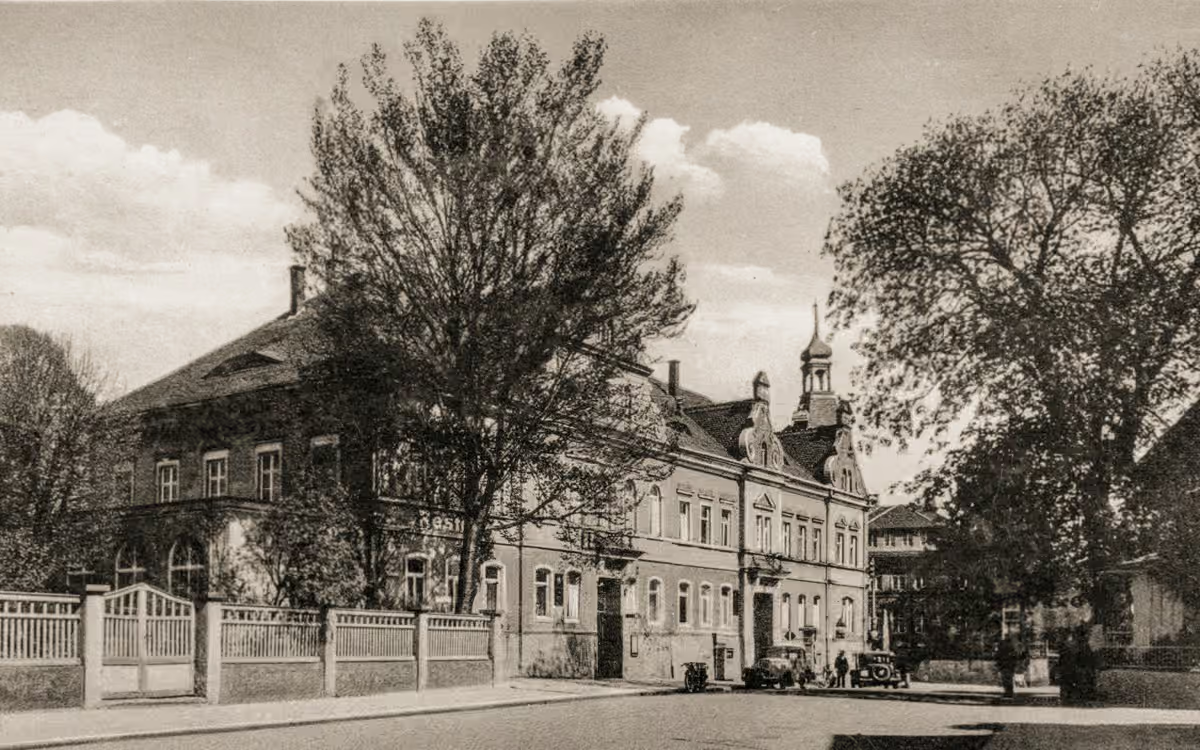
Purchase of the property by the Kühne family. Significant renovation and restoration work was carried out. This included the demolition of the hall’s interior, including the parquet floor, which meant that no events could be held from 1993 onward. - 1995
Bankruptcy of the Kühne family and closure of the Schützenhaus for several years. - 1997
Gerd Busch becomes the new leaseholder. Three years later, he acquires the Schützenhaus together with his son Dirk Busch. Both owners have since also been operators of the traditional inn.
The Busch Family
The Pulsnitzers
Over 25 years of hospitality, event and cultural operations, and accommodation in the gingerbread town of Pulsnitz!